On the European harissa problem
The original, not the interpretation.
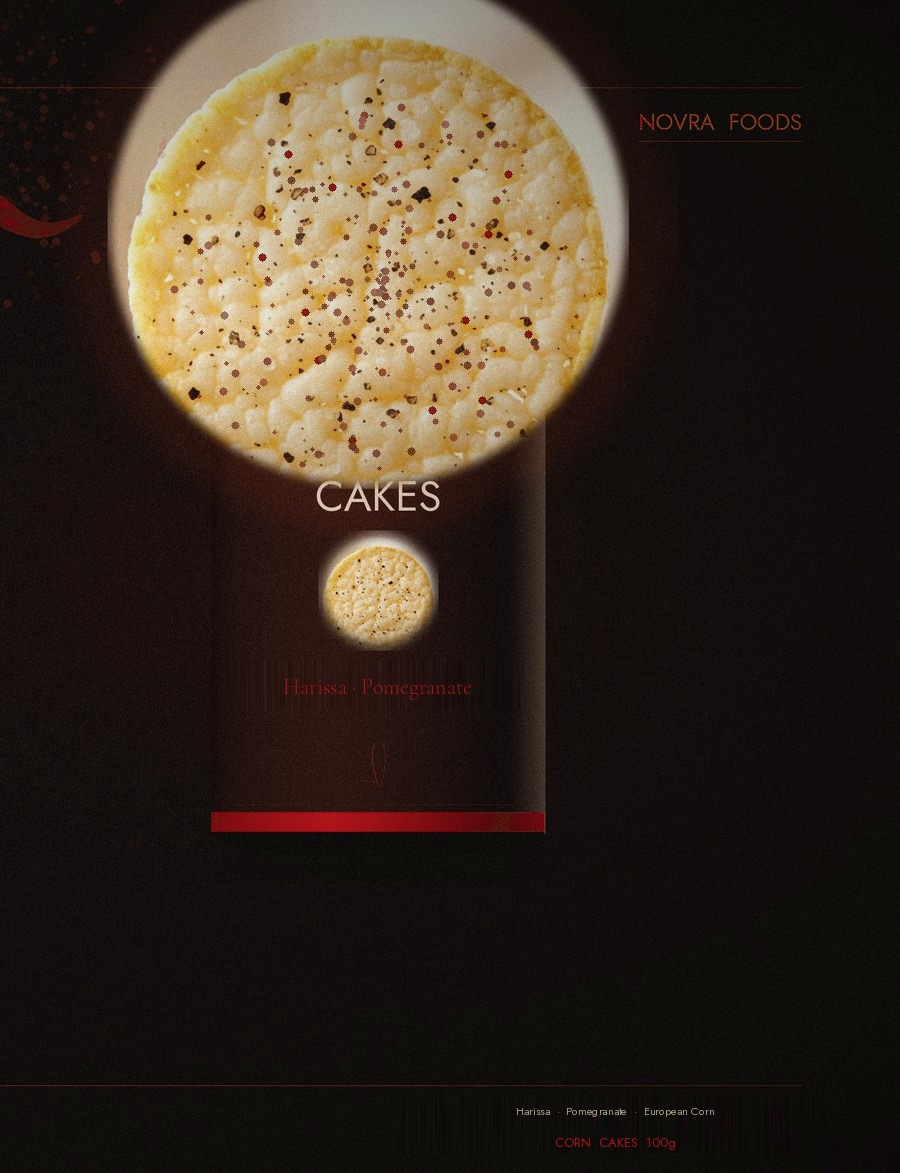
Tunisian harissa — the original, made from baklouti pepper, not the diluted European interpretation — balanced against sun-dried pomegranate from Turkey. Fire and fruit. The warmth of the pepper builds; the pomegranate interrupts it, briefly, then yields.
Harissa as sold in European supermarkets is not harissa. It is a red pepper paste with some spice, labelled harissa because the word has currency. The original — Tunisian harissa, made from baklouti peppers, caraway, coriander, and olive oil — has a specific heat profile that builds rather than burns. It has complexity. The Tunisian baklouti pepper is mild enough to eat raw but develops depth when dried and processed. The European version substitutes bird's eye chilli and red pepper, which produce immediate, one-dimensional heat. We source from a Tunisian cooperative and use the original formulation. The pomegranate is not decoration — it interrupts the harissa heat at its peak, providing momentary sweetness that resets the palate and makes the cycle repeat.
Flavour Profile
- Tunisian harissa — builds gradually, complex heat
- Sun-dried pomegranate — momentary sweetness, jewel-like burst
- Caraway and coriander — quiet depth
Ingredients
Organic corn · Extra virgin olive oil · Tunisian harissa (baklouti pepper) · Sun-dried pomegranate (Turkey) · Sea salt · Coriander · Caraway
Suggested Pairings
Greek yoghurt with honey · Pomegranate seeds · Mint lemonade · Strong Arabic coffee